Ditch the Scroll. Pick Up a Book. Change Your Brain.
Let’s be honest—how often do we reach for our phones just to fill time?
- Waiting in line? Scroll.
- Bored on the couch? Scroll.
- Settling into bed? Scroll until we pass out.
I found myself constantly scrolling through Instagram stories in the morning when I woke up to start my day, sometimes this would even dely me starting my day.
The problem isn’t just the time we lose—it’s the way scrolling shapes our thinking. Social media and endless feeds serve up pre-packaged content, requiring nothing from us except passive consumption. It’s quick, easy, and addicting.
But reading? Reading demands something different. It challenges our minds, sparks our imagination, and engages us in ways that scrolling never will.
Having a little inpiration from @Stefanie Stimac and her regular posts about reading. I was inspired with one comment she made about reading instead of scrolling.
Your Brain on Reading vs. Your Brain on Scrolling
If you think the benefits of reading are just nostalgic book-lover talk, think again. Studies prove that reading doesn’t just entertain us—it fundamentally changes the way our brains work.
🧘♂️ Reduces stress – Reading for just six minutes can lower stress levels by 68%, making it more effective than listening to music or drinking tea [The Argus] .
🧠 Improves focus & memory – Unlike scrolling, which scatters attention and shortens our ability to concentrate, reading strengthens neural connections, helping us retain information and focus better over time [Healthline].
💖 Boosts empathy – Fiction readers are better at understanding emotions and interpreting social situations, making them more empathetic in real life [Healthline].
⏳ Increases lifespan – People who read books regularly have a 20% lower mortality risk compared to non-readers. Reading literally helps you live longer [Social Science & Medicine].
Yet, most of us still default to screens instead of books. Why? Because reading requires effort. And we’ve become more used to consuming pre-made content that is easier load on our brains.
Watching vs. Imagining: The Passive vs. Active Mind
Scrolling feeds us fully formed images and narratives, designed to be consumed without thought. Every second, a new video, a new meme, a new perfectly curated aesthetic. Our brains don’t create anything—they just react.
Reading, on the other hand, is active. A book hands you words, but you have to turn those words into images. You have to visualize the character’s face, hear their voice, and imagine the setting. This isn’t just more engaging—it strengthens creativity, memory, and cognitive flexibility.
When you watch a movie, you’re seeing someone else’s interpretation of a story. When you read a book, you build the world yourself.
Why I Read on Flights Instead of Watching Movies
One of the best places to notice the difference between passive and active consumption is on a long flight.
I always see the same thing: rows of passengers locked into their screens, bingeing movie after movie, unable to sleep. By the time we land, they look drained—zoned out, overstimulated, and exhausted.
Meanwhile, reading on a flight does the opposite. It keeps my mind engaged but not overwhelmed. It helps me relax. And most of the time, I actually end up falling asleep—naturally, not from sheer screen fatigue.
This isn’t an anti-movie argument (I love a good film). But when every spare moment is filled with passive consumption, we lose something. We lose creativity, focus, and the ability to sit with our own thoughts.
Read, Share, Repeat: The Power of Passing on a Book
Recently, I finished a John Grisham book and, instead of letting it collect dust, I mailed it to a friend with a handwritten note encouraging her to read it.
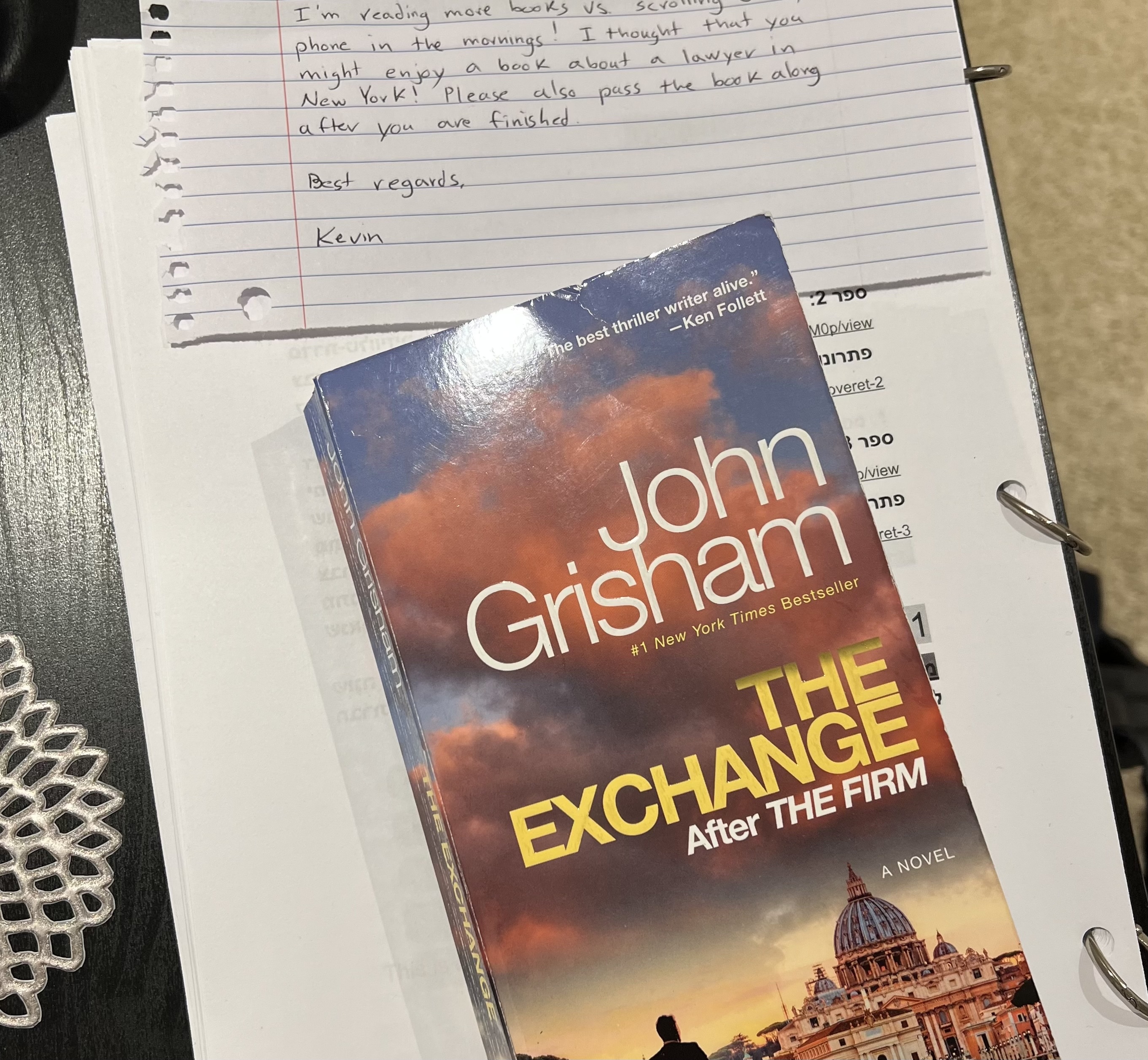
Why? Because books aren’t just things—they’re experiences. They deserve to be passed on.
In an era where interactions are reduced to likes and comments, handing someone a book is a rare, personal gesture. It’s an invitation to unplug, slow down, and engage with something real.
Your Turn: Make the Swap
I’m not saying never scroll. But I am saying be intentional about what you feed your mind.
Here’s the challenge:
📖 Read instead of scrolling – Even just 10 minutes a day. Start small.
🎁 Pass along a book you love – Write a note. Make it personal.
📬 Got a great book? Send it my way! – I’m always open to my next read.
Your brain deserves more than an algorithm-curated feed. Give it something real.
References & Further Reading
- University of Sussex study on stress reduction through reading: The Argus - 2009
- Health benefits of reading, including focus, memory, and empathy: Healthline - 2019
- Study on increased lifespan for book readers: Social Science & Medicine - 2017